
Keyvany returned with another Mercedes-AMG G 63 project, this time under the G950 name, built around a body package and output figure aimed well beyond the factory version. The new designation points straight to the power figure, 950 metric horsepower, equal to 937 brake horsepower and 699 kilowatts.
The tuner starts at the front with a revised bumper shaped close to the original part, though a sharper splitter now extends lower. A fresh grille replaces the standard unit and takes visual cues from the Panamericana layout, while the tuner logo sits in the center. Above, the hood carries a large integrated scoop, and two separate light bars appear, one above the windshield, one below the grille.

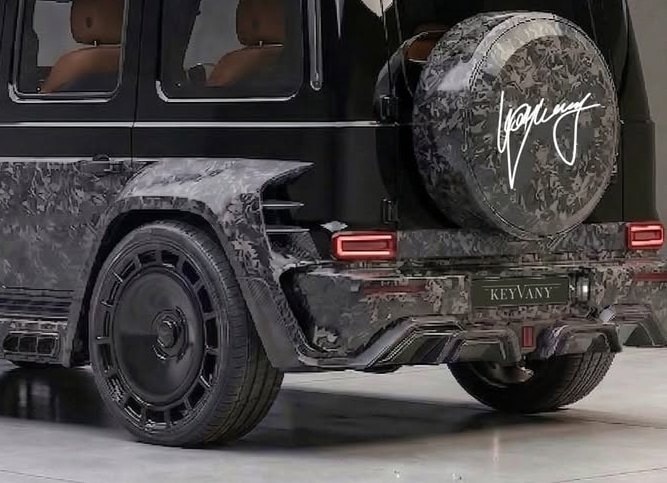
The side profile changes even more. Lower door sections, fenders, and rear three-quarter panels all receive added extensions, making the vehicle wider than stock. Several vents appear along the flanks, and ahead of each wheel sit three exhaust outlets built into the side skirts. Ride height drops closer to the ground.
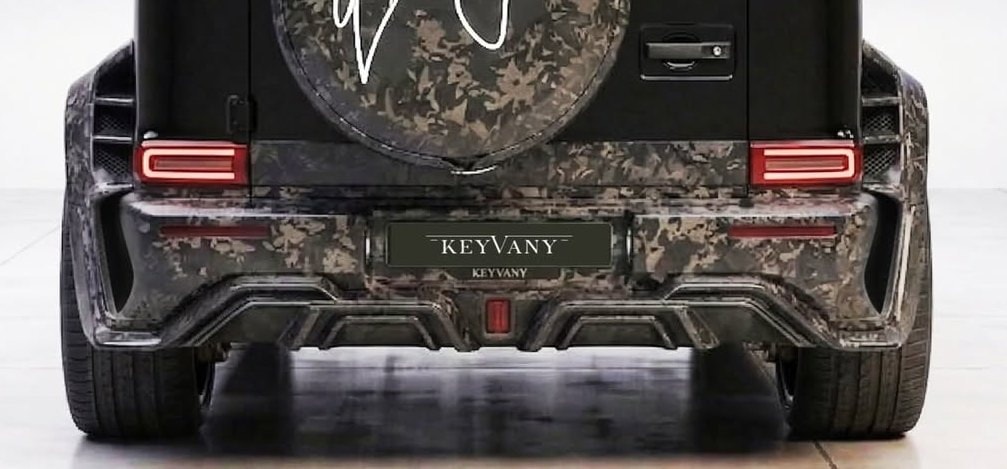
At the rear, Keyvany leaves the factory taillights alone, unlike Mansory, which the source mentions for comparison. Even so, the tail section adds enough new parts to shift the whole balance. The tailgate gains fresh trim, the spare-wheel carrier changes shape, and the diffuser adds an extra brake light in the center. A double spoiler finishes the roof line.

One detail interrupts the whole composition. The wheel set looks restrained compared with everything around it.
Inside, the source notes no major visual disruption. The cabin appears to avoid the same treatment applied outside, which creates a sharp contrast once the doors open. Or perhaps contrast is the wrong word here. Separation fits better.
Keyvany based the project on the Mercedes-AMG G 63 with its 4.0-liter biturbo V8 as the starting point. Factory output stays at 585 metric horsepower, listed in the source as 577 brake horsepower and 430 kilowatts. The tuner raises those figures to 950 metric horsepower, which marks a large numerical jump over standard specification.

The article source also frames this project after several Ferrari Purosangue conversions from the same tuner, none described there as especially convincing. This G-Class follows with a similar direction, built around excess rather than restraint.
From front to rear, nearly every visible section carries a new part. Splitter, grille, hood, roof section, arches, diffuser, side skirts, vents, spoilers, each area receives added treatment. The result leaves little untouched.
Whether the wider shell and triple side exhausts improve the G 63 depends on taste. The source avoids softness on that point, and the vehicle itself leaves little room for neutral reactions.
Mercedes-AMG G63 by Keyvany – Photo Gallery